.png)
Creatine monohydrate is one of the most widely studied ingredients in sports nutrition. For decades, athletes, fitness enthusiasts, and researchers have relied on it to support performance during intense exercise. Its strong scientific backing has made creatine a staple in the supplement industry. But as its popularity has grown an important question has been raised: if the creatine molecule is the same, what actually determines creatine quality?
Creatine is a naturally occurring compound found primarily in skeletal muscle. Its main role is to support the regeneration of adenosine triphosphate (ATP), the molecule responsible for providing energy during muscle contraction. During short bursts of high-intensity activity such as sprinting, jumping, or resistance training, the body rapidly uses ATP for energy. Creatine helps regenerate ATP through the phosphocreatine energy system, allowing muscles to sustain powerful movements for longer periods of time.
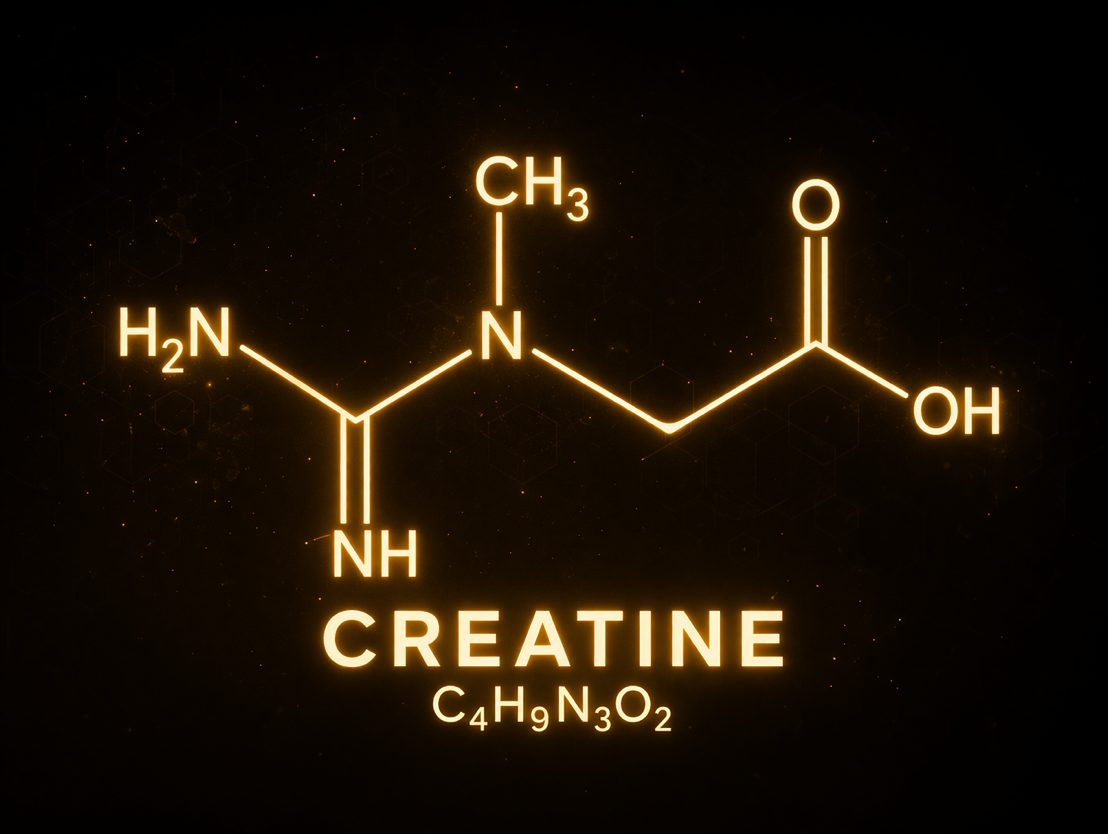
Taking this into account, supplementing with creatine increases the amount stored in muscle cells. This can help support strength, power output, and overall performance during high-intensity exercise. Because of this mechanism, creatine monohydrate has been extensively studied in sports science.
Numerous studies and systematic reviews have evaluated its safety and effectiveness. The International Society of Sports Nutrition has concluded that creatine monohydrate is both safe and effective for improving exercise performance when used at recommended doses. Regulatory authorities have also assessed the scientific evidence. The European Food Safety Authority (EFSA) states that creatine increases physical performance in successive bursts of short-term, high-intensity exercise, which is now an authorised health claim in the European Union when 3 grams of creatine are consumed daily.
The involvement of organisations such as EFSA and the International Society of Sports Nutrition further reinforces the strong scientific credibility behind creatine monohydrate.
While creatine itself is a well-understood compound, the quality of the creatine ingredient used in supplements can vary significantly. This makes ingredient selection an important consideration for both supplement brands and consumers. High-quality creatine monohydrate typically contains at least 99.9% creatine. During production, small amounts of by-products can form, including compounds such as dicyandiamide (DCD) and dihydrotriazine (DHT). These impurities are naturally associated with creatine synthesis and must be carefully controlled during manufacturing.
Reliable suppliers therefore implement strict production processes and extensive analytical testing. Each batch is typically tested for purity, heavy metals, microbiological safety, and impurity levels to ensure consistent quality. For supplement brands, these quality controls are essential to ensure product safety, regulatory compliance, and consumer trust.
This focus on ingredient quality is the foundation behind Qura Creatine.
Qura Creatine was developed to support the growing demand for high-quality, transparent ingredients in the sports nutrition industry. By focusing on purity, impurity control, and strict testing standards, Qura Creatine aims to provide a reliable creatine ingredient for brands developing high-performance supplements.
As the sports nutrition industry continues to evolve, the conversation around creatine is expanding beyond the molecule itself to include how the ingredient is produced, tested, and controlled. Ingredient quality, transparency, and consistency are becoming increasingly important for brands that want to build trust with consumers.
Creatine will continue to play a central role in sports nutrition. With its strong scientific foundation and a focus on ingredient quality, Qura Creatine is designed to support the next generation of creatine products.
Kreider, R. B., et al. (2017). International Society of Sports Nutrition position stand: Safety and efficacy of creatine supplementation in exercise, sport, and medicine. Journal of the International Society of Sports Nutrition.
EFSA Panel on Dietetic Products, Nutrition and Allergies. (2011). Scientific Opinion on the substantiation of health claims related to creatine and increase in physical performance during short-term, high-intensity exercise. EFSA Journal.
Bemben, M. G., & Lamont, H. S. (2005). Creatine supplementation and exercise performance: Recent findings. Sports Medicine.
Buford, T. W., et al. (2007). International Society of Sports Nutrition position stand: Creatine supplementation and exercise. Journal of the International Society of Sports Nutrition.References