Qura Creatine is supported by a structured quality framework designed to meet the expectations of professional brands, regulatory teams, and procurement partners. This framework emphasizes independent verification, complete batch traceability, and tightly controlled manufacturing and packaging processes to ensure consistent, verifiable product quality.
Every batch is tested prior to release by accredited third-party laboratories, including Eurofins Laboratories facilities in both the EU and USA. Testing protocols include:
Purity confirmation
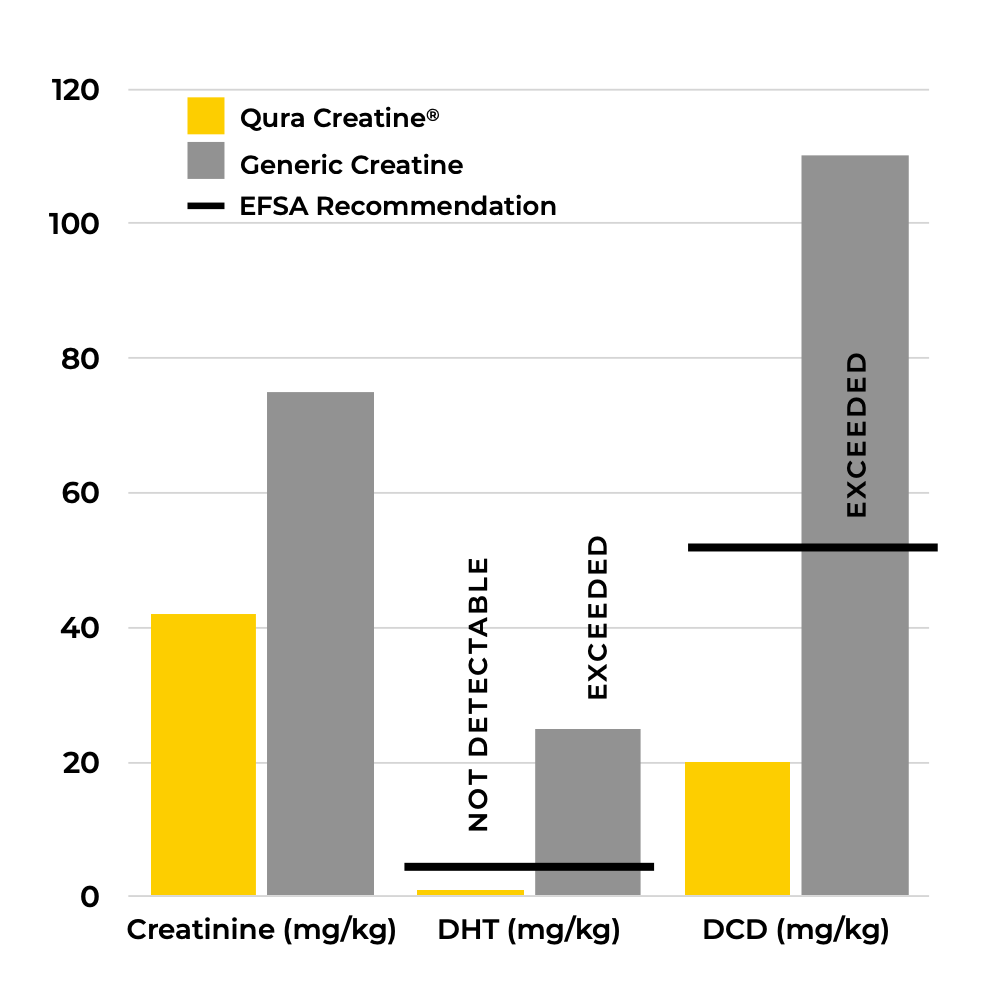
Screening for impurities (creatinine, DCD, DHT) and heavy metals
Microbiological safety analysis
Anti-doping testing

Full batch-level traceability is maintained from production through final packaging. This system includes:
Unique batch identification codes
Linked third-party laboratory test reports
Controlled documentation for each production lot
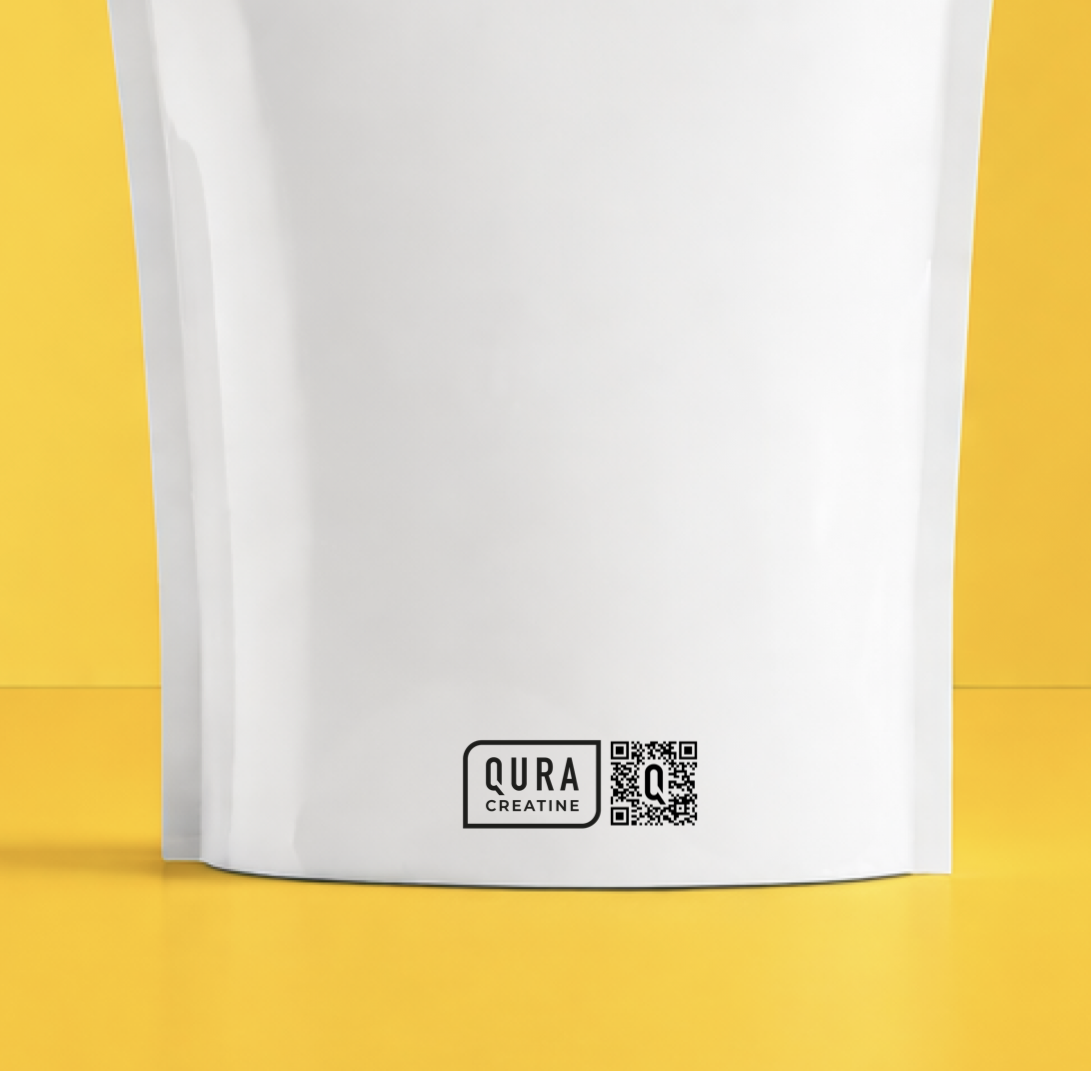
Batch-specific QR codes on packaging for direct access to verification data

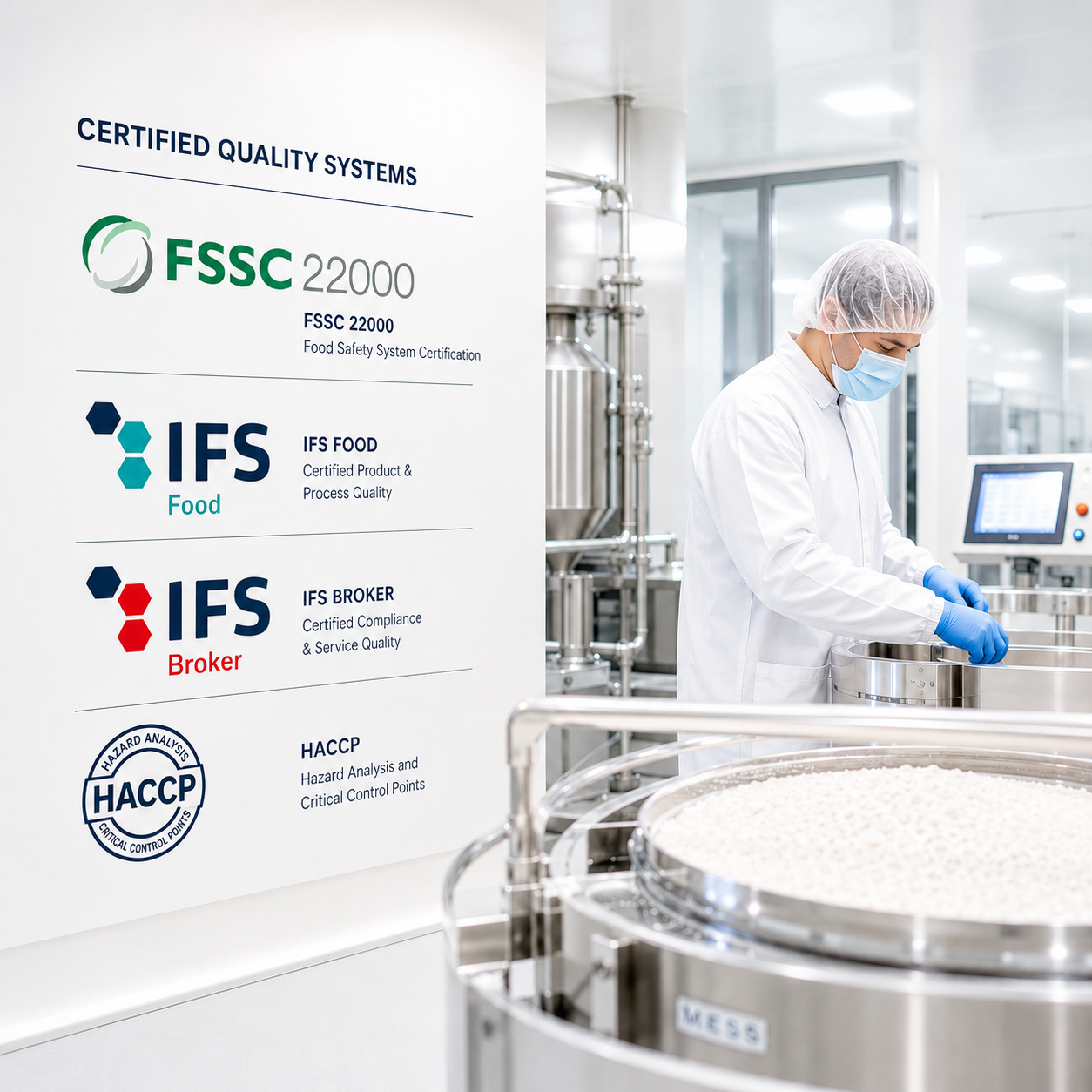
Production and handling follow internationally recognized food safety and quality frameworks to ensure consistency and accountability throughout the supply chain:
Manufacturing in an FSSC 22000-certified facility with strict impurity and quality controls
Final packaging and format customization performed in an IFS-approved co-packing facility

The ingredient is developed to support regulatory requirements across major global markets, including the European Union and United States. Supporting documentation, such as specifications, certificates, and batch-level data is available to assist customers. The ingredient is certified suitable for Halal and Kosher use in accordance with supplier-governed specifications.
Qura Creatine is an ultra-high-purity (≥99.95%) creatine ingredient developed for brands and formulators that demand trust, consistency, and professional reliability. It is designed for high purity, excellent solubility, and reliable performance across a wide range of applications.
Qura Creatine meets a minimum purity specification of ≥ 99.95% creatine monohydrate, with tightly controlled limits for heavy metals, microbiology, and impurities.
Qura Creatine is an ultra-high-purity (≥99.95%) creatine ingredient developed for brands and formulators that demand trust, consistency, and professional reliability. It is designed for high purity, excellent solubility, and reliable performance across a wide range of applications.
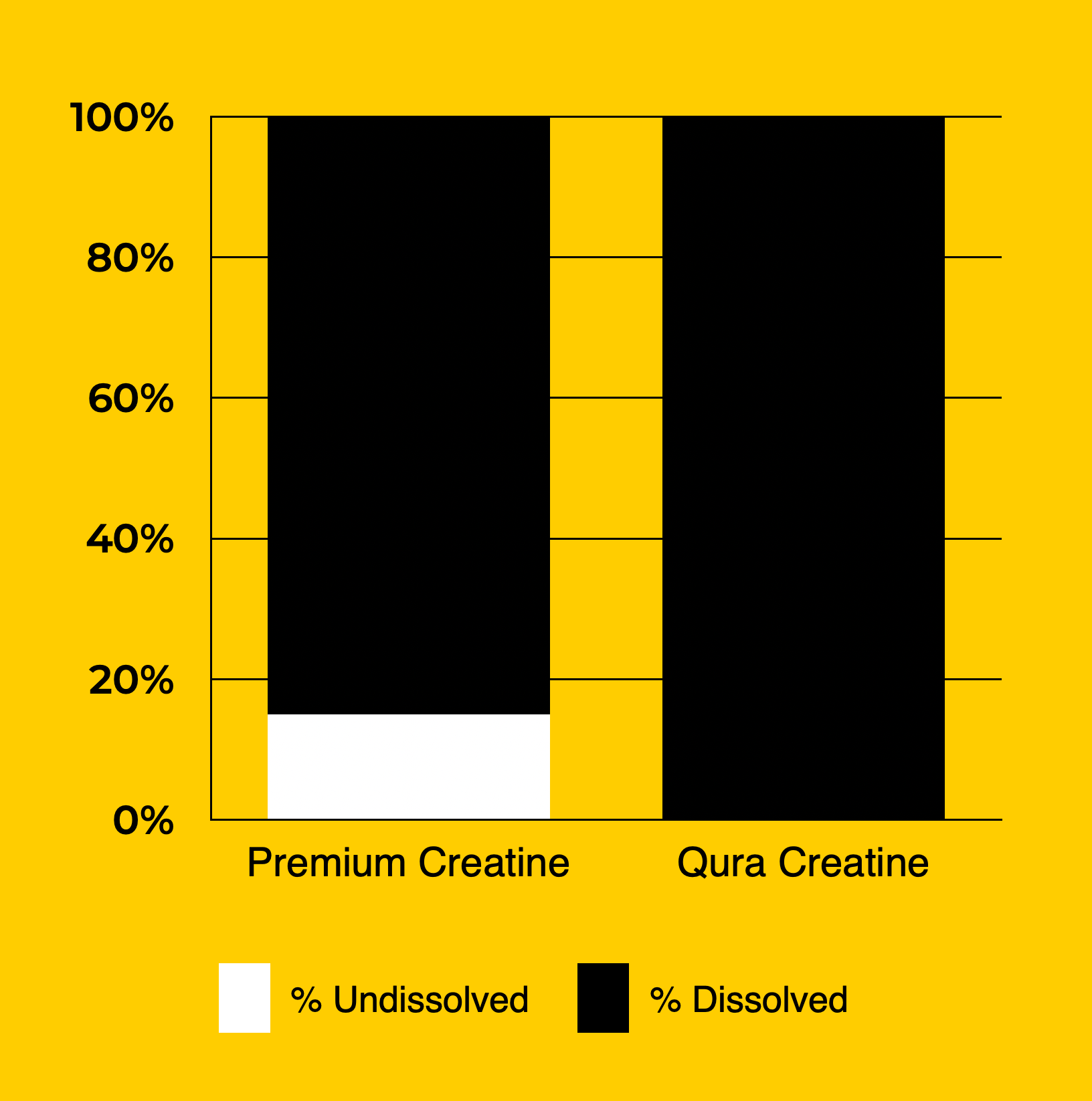
Creatine monohydrate naturally has moderate solubility in water. Qura Creatine is manufactured with controlled particle size to ensure good dispersion and mixability in powders and beverages.
Most evidence-based protocols recommend a maintenance dose of 3–5 g per day. Daily intake of 3 g supports high-intensity physical performance under authorised claim frameworks in the EU.
Qura Creatine differentiates itself through:
Very high purity standards
Batch-level analytical documentation
Controlled manufacturing processes
Each batch is fully traceable and independently tested in the EU and USA to support safety, anti-doping assurance, and global regulatory requirements.
Yes. Each batch is analytically tested for purity, heavy metals, and microbiological parameters. Additional third-party can be performed according to customer or market requirements.
Qura Creatine can be mixed with water. Consistency of daily intake is more important than timing. Many users take it around workouts or with a meal.
Yes. Creatine monohydrate is synthetically produced and not derived from animal sources, making it suitable for vegan and vegetarian positioning.
Halal or kosher suitability depends on site-specific certifications and can be confirmed per batch.
Qura Creatine is an ultra-high-purity (≥99.95%) creatine ingredient developed for brands and formulators that demand trust, consistency, and professional reliability. It is designed for high purity, excellent solubility, and reliable performance across a wide range of applications.
Research following long-term supplementation protocols shows no adverse effects in healthy populations at recommended intake levels. Consistent daily use of around 3–5 g is common practice. Cycling is generally a personal preference rather than a scientific necessity.
Key references:
Kreider RB et al., JISSN (2017).Antonio J et al., JISSN (2021).
Creatine supports physical performance during short bursts of high-intensity exercise. Within the EU, authorised claims state that daily creatine consumption can enhance physical performance in successive bursts of short-term, high-intensity exercise when consumed at 3 g per day.
Key references:
EFSA (2012) – Article 13(1) health claim evaluation for creatine.
Kreider RB et al., JISSN (2017).
Creatine is typically used by athletes, active individuals, and people looking to support high-intensity performance. It is intended for adults. Pregnant or breastfeeding women and individuals with medical conditions should seek professional advice before use.
Key references:
Buford TW et al., JISSN (2007).Kreider RB et al., JISSN (2017).
Our core offering is creatine monohydrate, the most studied and widely accepted form in sports nutrition and functional food applications. Additional formats or customised specifications may be available depending on project scope.
Yes. Our technical team supports solubility considerations, particle size selection, blending behaviour, and application guidance for powders, capsules, tablets, and functional formats.
Lead times depend on volume, packaging format, and contract agreements. Standard production planning allows for predictable delivery windows suitable for OEM and contract manufacturing partners.
Production follows strict quality controls designed to minimise contamination risks, and batches are tested in alignment with recognized sports-nutrition anti-doping standards, including analysis conducted in accordance with the requirements of the Cologne List.
Production is carried out in an FSSC 22000–certified facility, while final packaging is performed in an IFS Food–certified site, ensuring controlled processes, traceability, and compliance with internationally recognized food-safety and quality management standards.
We focus on consistent purity, controlled manufacturing processes, and full traceability. Every batch is supported by analytical testing for identity, purity, heavy metals, and microbiological safety, and is accompanied by a QR code quality seal that links directly to a dedicated page displaying the verified test results for that specific batch.
Each shipment includes full traceability documentation to support audits and regulatory compliance.
Our ingredient is positioned as a high-purity, fully traceable creatine monohydrate with strong documentation, enhanced solubility characteristics, and flexible commercial conditions, helping brands balance quality, performance, service, and scalability.
We provide guidance based on authorised claim frameworks and market-specific regulations. Brands remain responsible for final label compliance in their target markets.
Yes. We supply quality documentation, ingredient storytelling assets, and technical information that can support listings with retailers, distributors, and e-commerce platforms.
Yes. We offer an ingredient branding concept that allows partners to communicate quality and transparency on pack and in marketing materials, subject to licensing guidelines.
Creatine monohydrate is synthetically produced and suitable for vegan positioning. Halal or kosher suitability depends on site-specific certifications and can be confirmed per batch.
Creatine is a naturally occurring compound stored in muscles that helps regenerate ATP, the body’s rapid energy source used during short, intense efforts such as lifting or sprinting.
References:
Kreider RB et al., JISSN (2017).
EFSA (2012) Scientific Opinion on Creatine.
Timing is flexible. Consistency matters more than exact timing. Many users take it with meals or around workouts.
References:
Antonio J et al., JISSN (2021).
Yes. Each batch is tested for purity and contaminants, supporting a high-quality standard aligned with leading European creatine practices.
References:
EFSA (2012) – Safety and efficacy review.
Kreider RB et al., JISSN (2017).
Most evidence-based protocols use around 3–5 g per day. Some users choose a short loading phase, while others prefer steady daily intake.
References:
Kreider RB et al., JISSN (2017).
Antonio J et al., JISSN (2021).
Some individuals may experience mild water retention or digestive discomfort. Splitting doses and staying within recommended intake levels can help minimise these effects.
References:
Kreider RB et al., JISSN (2017).Buford TW et al., JISSN (2007).